Bromeliaceae
Aechmea chantinii ‘Black’
Aechmea chantinii ‘Black’
Couldn't load pickup availability
Share
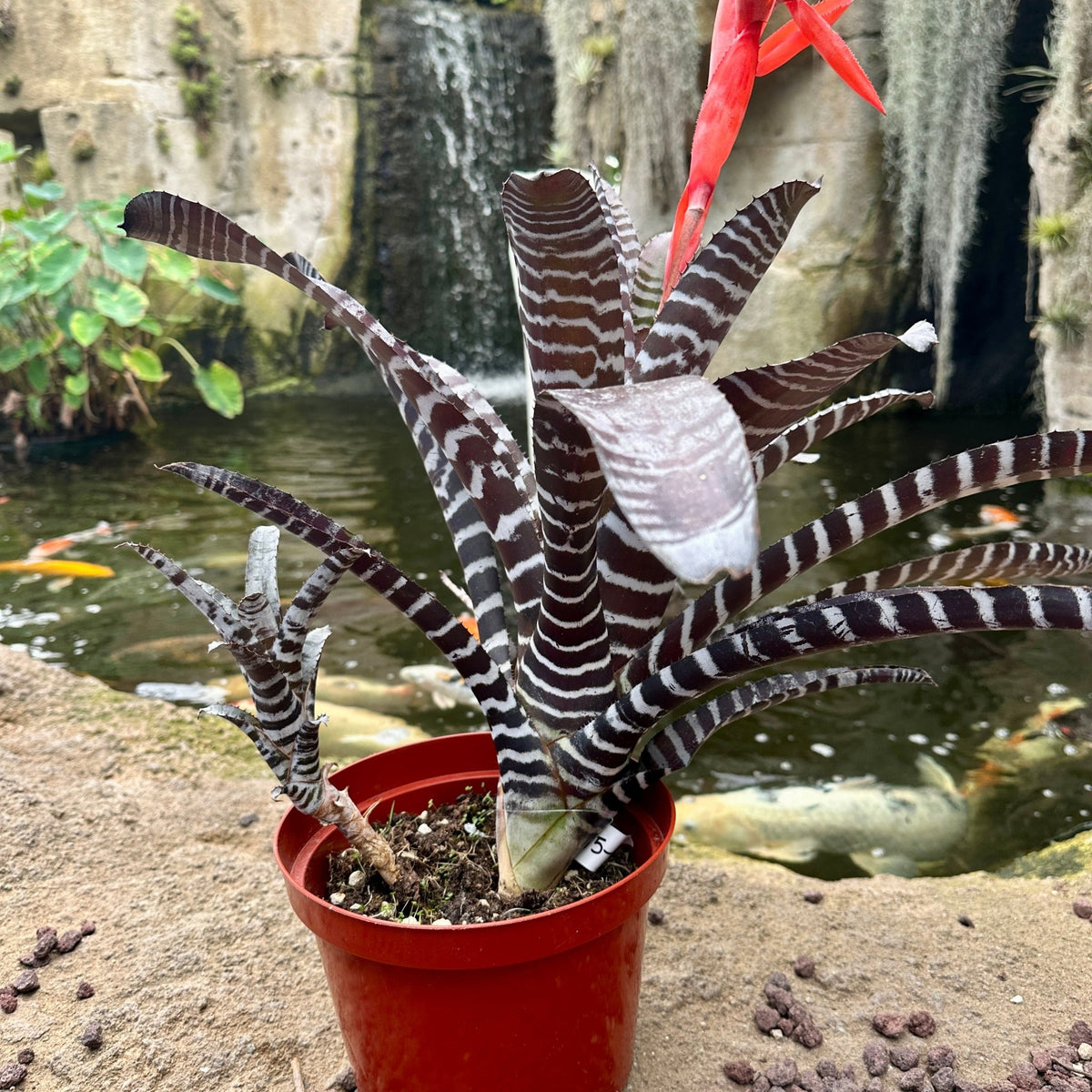
Aechmea chantinii is widely known as the "Amazonian Zebra Plant" and is considered by many to be the queen of the Aechmeas. The cultivar 'Black' takes that classic to a dramatic new level.
The foliage is the show. Under optimal bright, filtered light, the leaves develop a striking dark burgundy, chocolate-brown, or near-black base color that overlays the typical green undertones—a dramatically darker pigment that distinguishes it from the standard chantinii form. Against this moody background, the trademark horizontal "zebra" stripes stand out in luminous, graphic contrast. These bands are made up of highly visible, frosted silver-white or grey scales (trichomes) that create a pattern that looks almost painted on.
The inflorescence is the finale. When Aechmea chantinii 'Black' blooms, it sends up a pyramidal inflorescence with short spikes of bright yellow-orange flowers on erect, white-scaly, red-bracted stems. The red-orange primary bracts and branches tipped in yellow are the hallmark of this magnificent plant—a spectacular contrast to the dark foliage beneath. Bloom typically occurs from mid to early winter.
Provenance. This excellent dark form was found in Ecuador and has become the most popular chantinii variety in cultivation. It is a spectacular clone with wide, gracefully arching, dark-chocolate-colored leaves.
Caring for Your Plant:
Bright, filtered light is essential—both for the plant's health and for the deep, dark coloration that gives 'Black' its name. A position with dappled sun or very bright indirect light is ideal. Under full sun, once hardened off, it can tolerate some direct exposure and will develop its most intense color; outdoors in summer, unfiltered UV light produces particularly beautiful, intense darkness. Avoid deep shade, which will cause the plant to revert to a duller green-brown.
Keep the central "cup" (tank) filled with fresh water. Flush the reservoir with fresh water weekly to prevent stagnation, odor, and mosquito breeding. Water the potting mix when the top 2 inches of soil are dry—typically about once a week. The one rule: never let the pot sit in standing water. This plant will die if left in waterlogged soil.