Aspleniaceae
Asplenium nidus
Asplenium nidus
Couldn't load pickup availability
Share
Most ferns are delicate. This one is architectural.
Asplenium nidus—the bird's nest fern—is an epiphytic fern native across a wide swath of the Old World tropics: tropical southeastern Asia, eastern Australia, Hawaii, Polynesia, Christmas Island, India, and eastern Africa. In the wild it grows on tree trunks and branches, its rosette forming a natural “litter basket” that catches falling leaves and organic debris, creating its own compost pile and feeding the plant. It is one of the most recognizable ferns in cultivation, and one of the easiest to grow indoors.
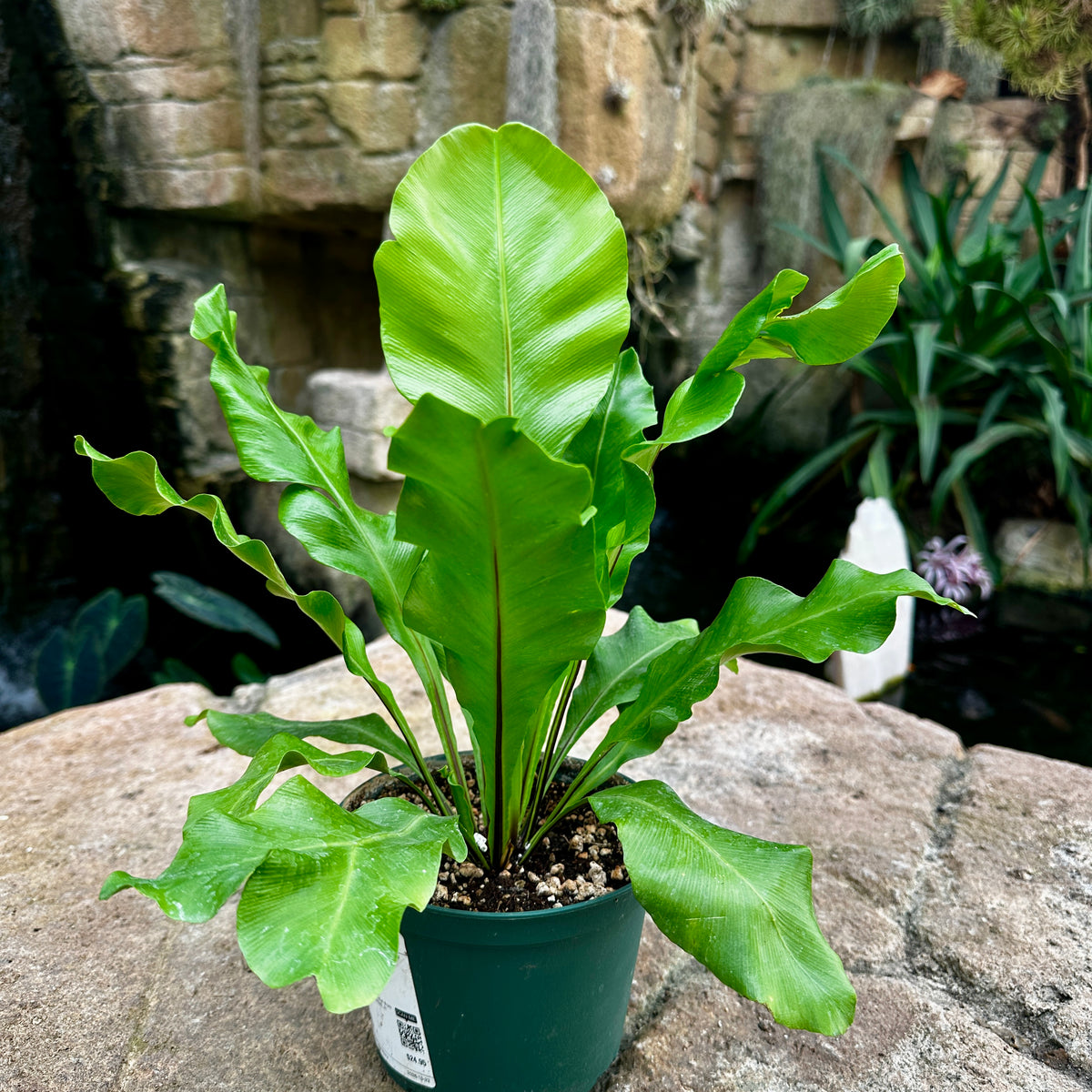
What it looks like. The fronds are simple, strap-shaped, glossy, and bright apple green, with contrasting dark brown to black midribs and undulating margins. They radiate upward and outward from a central crown, forming a vase-shaped rosette with a nest-like center. Indoors, fronds typically reach 18–24 inches (45–60 cm); outdoors in the tropics they can reach 4–5 feet. The undersides carry sori—clusters of sporangia—arranged in a herringbone pattern of straight black lines from the midrib to the margin, a detail that rewards close looking.
Why it works indoors. Bird's nest ferns are slow-growing and beginner-friendly. They tolerate lower light than most ferns—a bright north- or east-facing window is ideal—and they adapt to average household humidity, though they appreciate more. They are also non-toxic to cats and dogs, which makes them a safe choice for pet-owning households. The one thing they cannot tolerate is water sitting in the crown, which rots the growing point.
Care Instructions:
Bright, indirect light is ideal—a north- or east-facing window, or a spot with filtered light. It tolerates lower light than most ferns, including bathroom light, but avoid direct sun, which turns the fronds yellow and stops growth. In deep shade, growth slows and the rosette becomes less dense.
Water when the top inch of soil feels dry, and water around the edge of the pot—never into the central rosette. Keep the mix consistently moist but never soggy, and never let the pot sit in a saucer of water. Use room-temperature, filtered, or rainwater if your tap water is hard or heavily treated. In winter, reduce watering slightly but do not let the mix dry out completely.