Droseraceae
Dionaea muscipula (Venus Flytrap)
Dionaea muscipula (Venus Flytrap)
Couldn't load pickup availability
Share
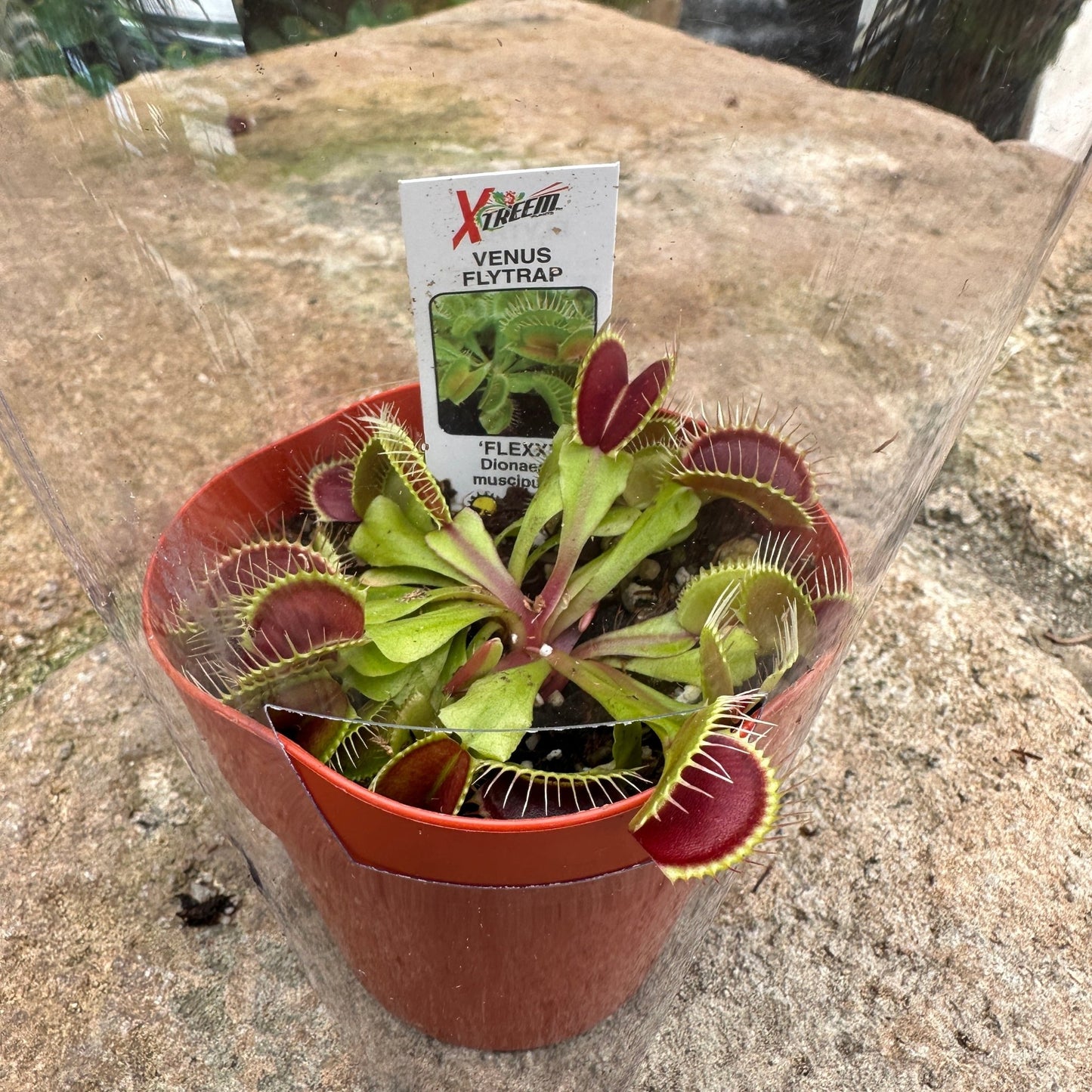
The Venus Flytrap (Dionaea muscipula) is one of nature's most fascinating carnivorous plants. Its iconic jaw-like traps snap shut on unsuspecting insects, making it a captivating conversation piece. This easy-to-grow perennial thrives on a windowsill with plenty of sun and pure water.
Plant Details:
· Type: Carnivorous, insectivorous perennial
· Foliage: Rosettes of leaves with distinctive, hinged snap traps
· Mature Size: Rosettes typically spread to 20-30cm (8-12 inches) wide; leaves up to 15cm (6 inches) long
· Family: Droseraceae (Sundew family)
· Native Range: Coastal wetlands of North and South Carolina, USA
· Unique Trait: One of the few plants capable of rapid movement to capture prey
Care Instructions
Light:
Venus Flytraps are sun-worshippers. They need at least 6 hours of direct sunlight every day to thrive and develop their characteristic red trap interiors. A sunny south-facing windowsill is ideal. Without enough light, the plant will decline.
Water:
Use only rainwater or distilled water. Tap water contains minerals that will harm and eventually kill your plant. During the active growing season, keep the pot sitting in a tray of water about 1 to 2 cm (0.5 to 1 inch) deep. Never let the tray dry out. Top watering is not recommended.
Dormancy (Winter Rest):
In winter, the plant requires a cold dormancy period of at least 10 weeks at temperatures between 35–50°F (2–10°C) to rest and regain energy for the next growing season. During this time, growth will slow and some traps may turn black and die back – this is perfectly normal.
Feeding:
Your Venus Flytrap can catch its own food. If kept indoors, you can supplement its diet by feeding it one live or freshly killed insect (like a fly, spider, or ant) every 2-4 weeks. Do not feed it meat or human food. Only feed traps that are large enough to close completely around the prey. Avoid triggering traps for fun, as this wastes the plant's energy.