Moraceae
Ficus altissima 'Yellow Gem'
Ficus altissima 'Yellow Gem'
Couldn't load pickup availability
Share
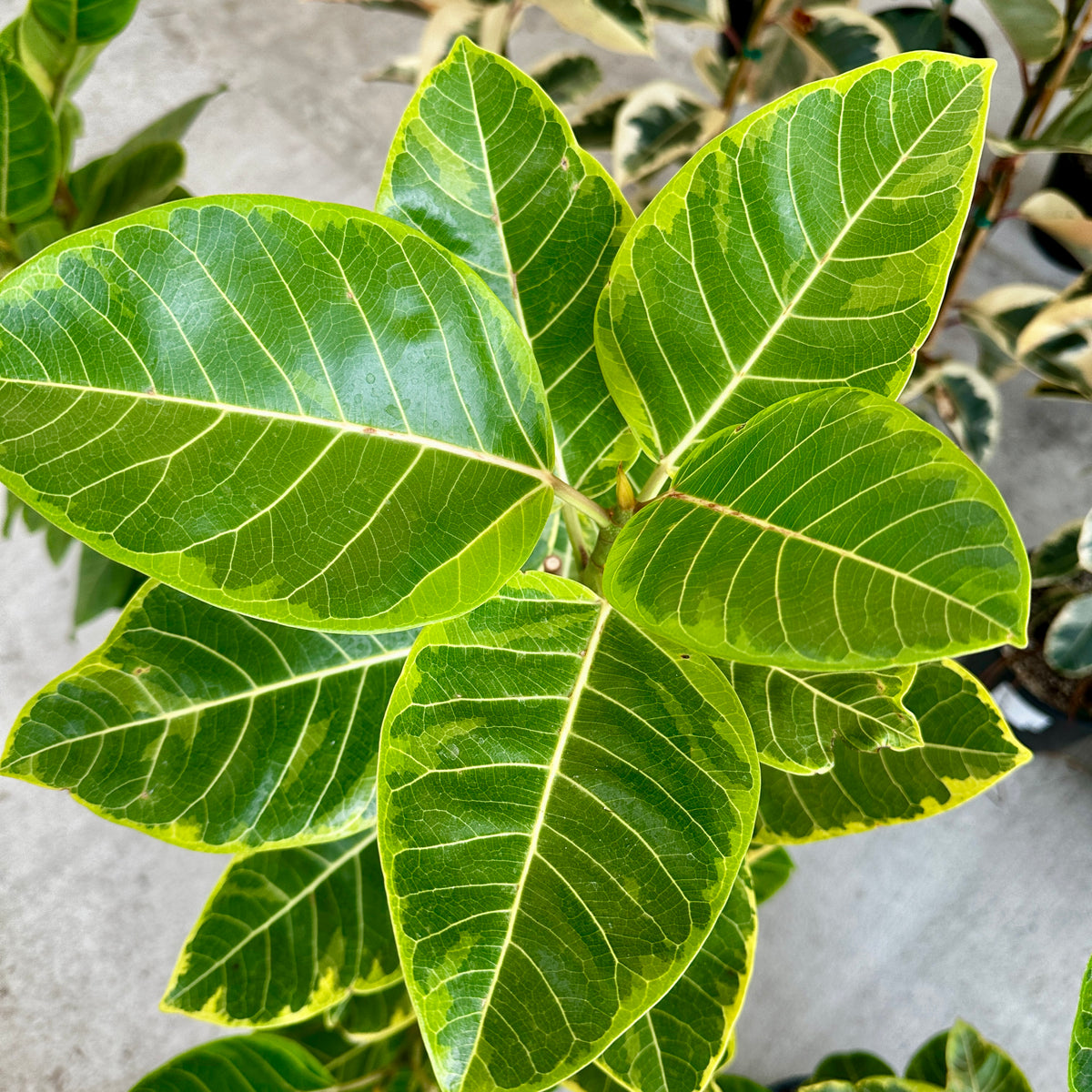
Some variegated plants look laboured. This one looks brushed on.
Ficus altissima ‘Yellow Gem’—also sold as Variegated Council Tree, Yellow Gem Ficus, or Yellow Gem Rubber Tree—is a cultivated selection of the Council Tree, native to the tropical regions of Southeast Asia, India, and Malaysia. Its defining feature is the foliage: large, broadly oval, glossy leaves in a rich medium green, overlaid with bold, bright yellow-green variegation that splashes and bleeds through the leaf surface in an organic, almost brushstroke-like pattern. It is one of the most striking variegated Ficus available, and it is increasingly positioned as a more forgiving alternative to the Fiddle Leaf Fig.
Why it works indoors. ‘Yellow Gem’ prefers bright, indirect light—the kind of spot near a south or east window where a sheer curtain or a few feet of distance keeps harsh sun off the leaves. It tolerates a few hours of gentle morning sun, but direct afternoon sun scorches the variegated foliage. In lower light, the yellow patterning fades toward green and growth becomes leggy. What it asks in return is consistency: Ficus plants dislike being moved frequently, and once settled in a bright spot, this one is quite low maintenance and good for beginners with attention to consistency.
How big it gets. Indoors, ‘Yellow Gem’ is a moderate to fast grower, reaching 5–7.5 ft in typical indoor conditions. It grows as an evergreen tree with a bold, architectural presence—substantial enough to anchor a corner, but manageable enough for a bright apartment.
Care Instructions:
Bright, indirect light is essential—close enough to a south or east window to feel the brightness, with a sheer curtain or a few feet of distance keeping the sun off the leaves. It tolerates a few hours of gentle morning sun, but harsh direct afternoon sun scorches the variegated foliage. Too little light fades the yellow toward green and leads to leggy growth. Aim for roughly 1,500–3,000 lux at the leaf surface at noon if you are measuring.
Water when the top 2 in of soil is dry—roughly every 7–10 days in summer and every 2 weeks in winter, depending on light and warmth. Water thoroughly until it drains from the bottom, then empty the saucer so the pot is not sitting in water. Never let the pot stand in water—soggy soil triggers root rot and leaf drop. Use the finger test or lift the pot to feel its weight rather than following a fixed calendar.