Apocynaceae
Hoya nummularioides
Hoya nummularioides
Couldn't load pickup availability
Share
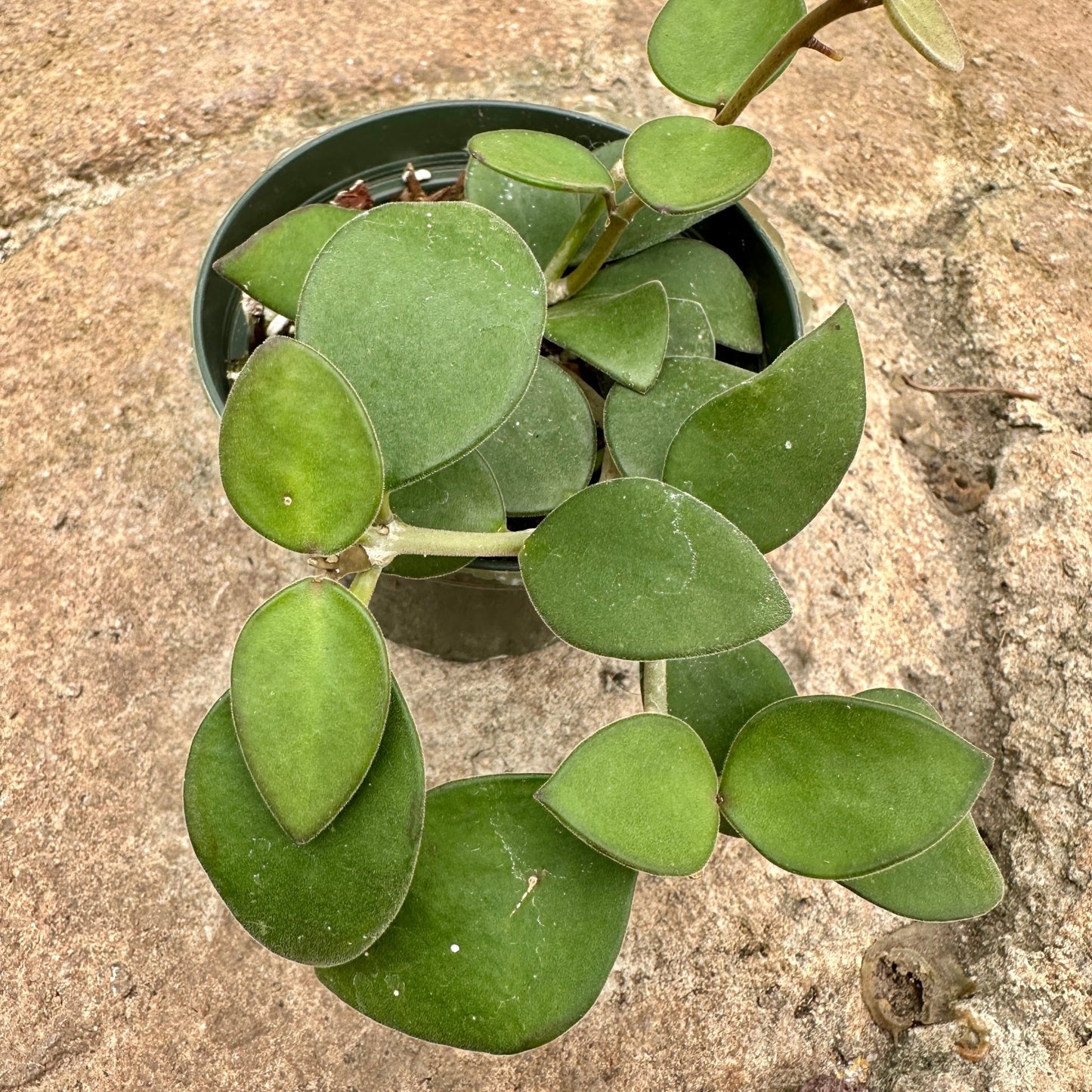
The Hoya nummularioides is a charming, easy-to-grow trailing vine celebrated for its small, coin-shaped, fuzzy leaves and breathtaking clusters of fragrant, star-shaped flowers. A rewarding bloomer, this plant brings a sweet, clove-like scent indoors and looks stunning cascading from a hanging basket.
Plant Details:
· Type: Epiphytic, twining evergreen vine
· Foliage: Small (approx. 1" long), rounded, coin-shaped, fuzzy, succulent-like leaves
· Flowers: Clusters of fragrant, star-shaped, pale lavender-white blooms with soft pink centers
· Mature Size: Can grow 2 to 6 feet in length
· Family: Apocynaceae
· Native Range: Cambodia, Laos, Thailand, Vietnam
Care Instructions
Light:
Provide bright, indirect light for optimal growth and abundant flowering. It can tolerate some direct morning sunlight but must be protected from harsh afternoon rays, which can damage the delicate foliage. Place it less than 3 feet from a south-facing window for the best results.
Water:
Allow the soil to dry out between waterings, as the plant's succulent-like leaves store water efficiently. Water thoroughly when the top 1 to 2 inches of soil feel dry, ensuring excellent drainage to prevent root rot. Reduce watering in the winter months.
Soil:
Use a light, airy, and well-draining potting mix. A combination of standard potting soil, orchid bark, and perlite is ideal for promoting drainage and aeration. A cactus or succulent blend also works well.
Temperature & Humidity:
Thrives in comfortable room temperatures between 65–75°F (18–24°C). Prefers moderate to high humidity levels of 50–70%, which can promote better flowering. Boost humidity with a pebble tray, occasional misting, or a humidifier.
Fertilizer:
Feed with a half-strength, balanced liquid fertilizer once a month during the spring and summer growing season to encourage healthy growth and blooming. Reduce or stop feeding in the fall and winter.
Pruning & Maintenance:
Trim away dead or discolored leaves to maintain a tidy appearance. Pruning can also help manage the vine's length and encourage a fuller, bushier plant.