Bromeliaceae
Mini Neoregelia ‘Mo Peppa Please’ (N. ‘Angel Face’ x N. ampullacea ‘Midget’)
Mini Neoregelia ‘Mo Peppa Please’ (N. ‘Angel Face’ x N. ampullacea ‘Midget’)
Couldn't load pickup availability
Share
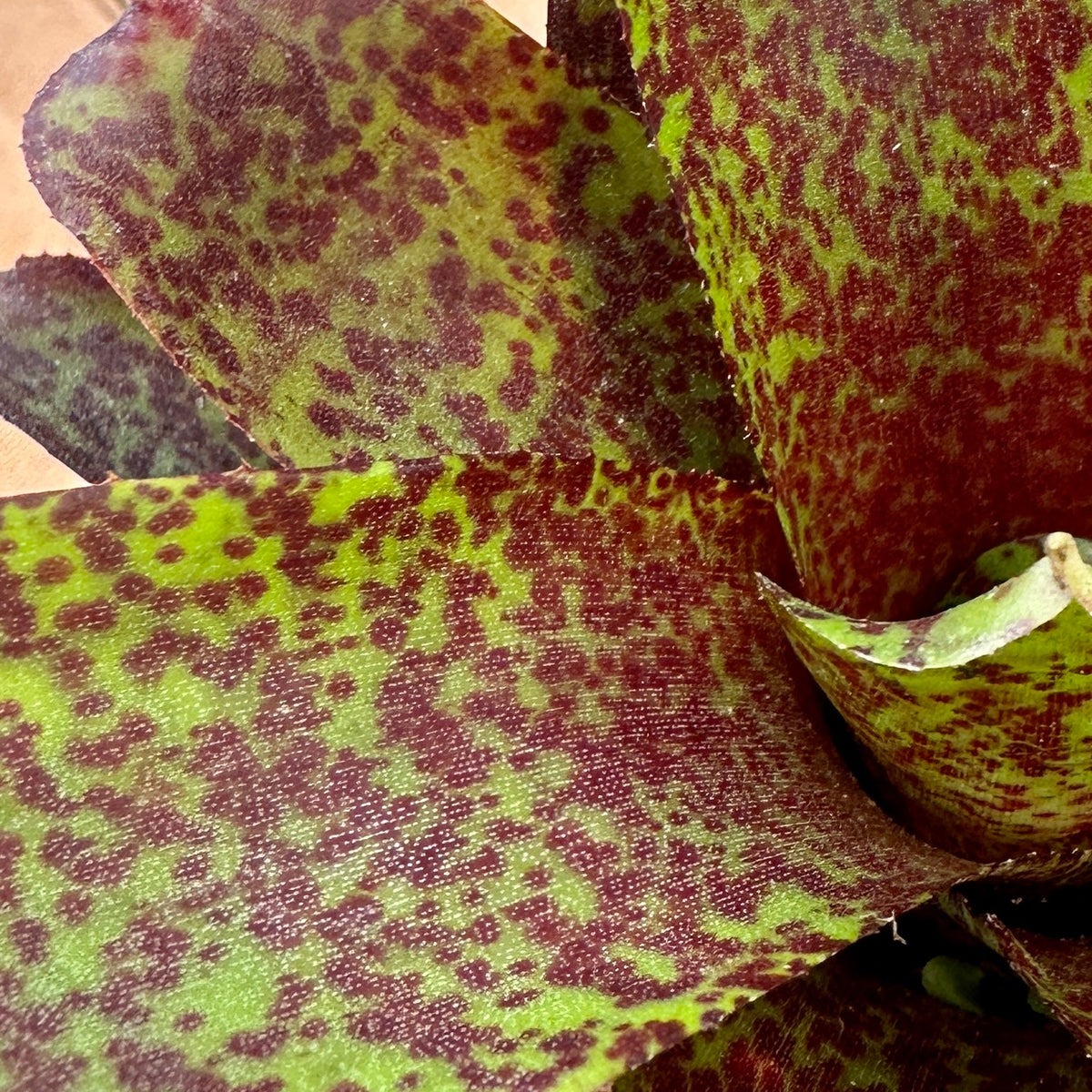
Neoregelia 'Mo Peppa Please' is a true miniature hybrid from Jim Irvin, bred from 'Angel Face' × ampullacea 'Midget'. The result is a compact, stiff-leaved rosette of glossy olive-green foliage, densely speckled with tiny, pepper-like burgundy dots. Under higher light, the plant flushes a striking bright red with green blotching, and the speckling intensifies along with it. The name is earned twice over: the peppercorn speckling, and the "please" of a plant that asks very little of you.
Why it's sized right. 'Mo Peppa Please' matures at roughly 6 inches across, though it will grow somewhat larger if fed heavily. That compactness makes it one of the most versatile Neoregelias in cultivation. It fits a 3-inch pot. It fits a 12×12×18 or 18×18×18 terrarium. It mounts comfortably on a small piece of wood. It sits on a desk without taking over the desk. Most Neoregelias outgrow their welcome within a year or two; this one simply doesn't.
Why terrarium keepers keep coming back to it. Neoregelias hold water in the tight rosette of leaves at their center—a natural reservoir that forms without any soil at all. In the wild, that reservoir becomes a micro-habitat. In captivity, dart frog keepers use these tanks for exactly the same purpose: Oophaga species and others rely on bromeliads as deposition sites for tadpoles, and 'Mo Peppa Please' is a favorite because it's small enough to place, dense enough to hold water, and produces pups fast enough to plant in numbers.
Caring for Your Plant:
Bright, filtered light for the best color. The red flush and dense speckling develop under strong light—a bright windowsill, or LEDs in a terrarium. Avoid harsh, direct midday sun, which can scorch the leaves. If your plant is staying green and you want more color, more light is the answer.
Keep the central "cup" filled with fresh water, and flush it out with clean water regularly—weekly is ideal. Stagnant water in a bromeliad tank is how you get rot and pests. It appreciates drying slightly between waterings and prefers not to sit with constant water on the leaves outside the cup.