Piperaceae
Peperomia argyreia - Watermelon Peperomia
Peperomia argyreia - Watermelon Peperomia
Couldn't load pickup availability
Share
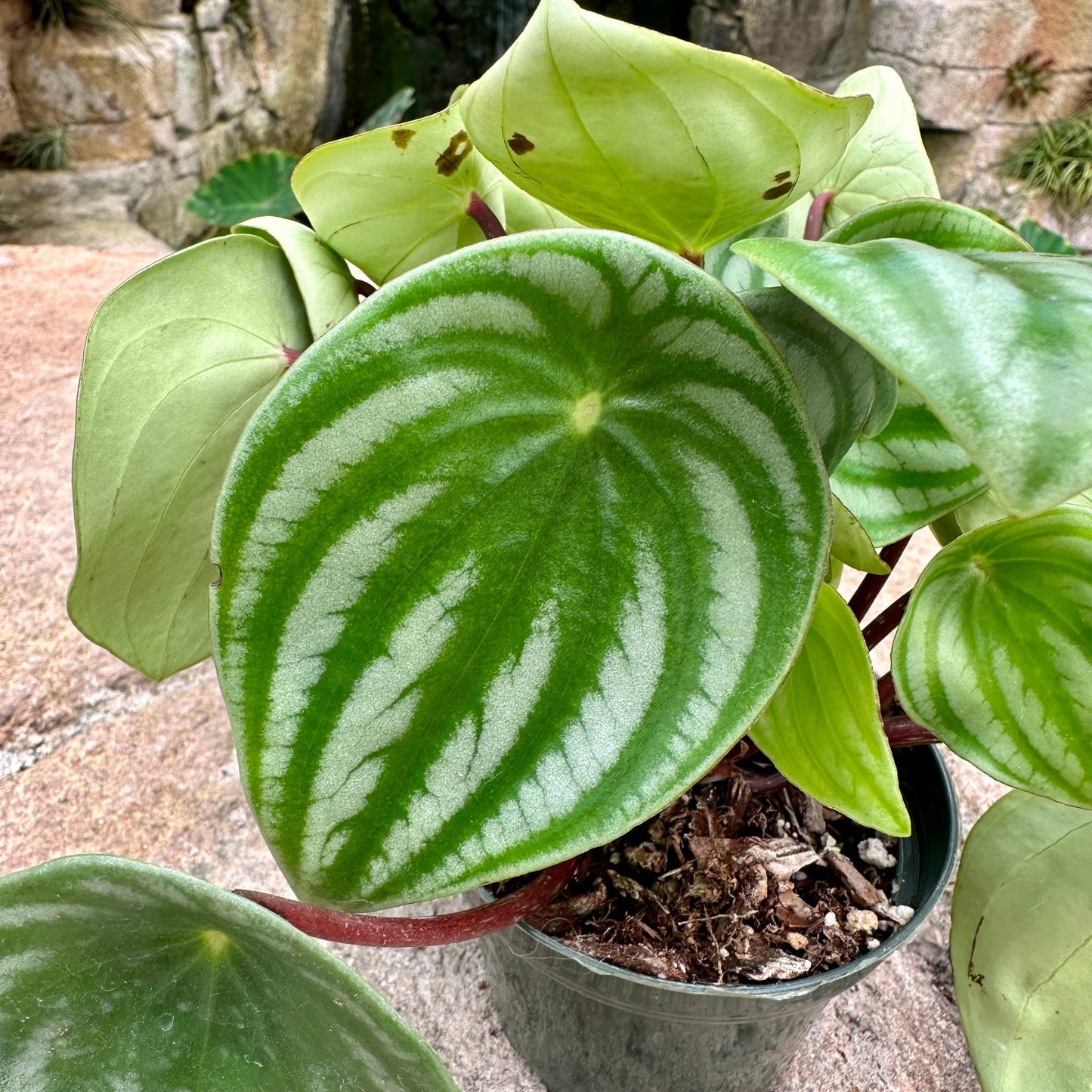
The Watermelon Peperomia (Peperomia argyreia) is a showstopping houseplant, prized for its unique, rounded leaves that beautifully mimic the rind of a watermelon with their silver and green stripes. Its eye-catching foliage and red stems make it a perfect, low-maintenance addition to any desk, shelf, or tabletop.
Plant Details:
· Botanical Name: Peperomia argyreia
· Common Names: Watermelon Peperomia, Watermelon Begonia
· Family: Piperaceae
· Type: Evergreen, herbaceous perennial
· Native Range: Northern South America (Bolivia, Brazil, Ecuador, Venezuela)
· Mature Size: 6 to 12 inches tall and wide
· Growth Habit: Compact, bushy, rosette-forming
· RHS Award: Award of Garden Merit
Care Instructions
Light:
Provide bright, indirect light for the most vibrant variegation. It can also adapt to medium light and even fluorescent office lighting. Avoid direct, harsh sunlight which can scorch the delicate leaves.
Water:
Allow the top half or so of the potting mix to dry out between waterings. Water thoroughly, but be careful not to overwater, as this plant is sensitive to soggy soil and prone to root rot. Its thick, fleshy leaves mean it can tolerate slight drying out.
Soil:
Use a well-draining, peat-free potting mix that can retain some moisture. A standard houseplant potting mix with added perlite for drainage works well.
Temperature & Humidity:
Thrives in warm temperatures between 65–75°F (18–24°C). It enjoys average room humidity but can appreciate a boost from a pebble tray, grouping with other plants, or a small humidifier, especially in dry air.
Fertilizer:
Feed with a diluted, balanced liquid fertilizer once a month during the spring and summer. Reduce or stop feeding in the fall and winter.
Repotting:
Watermelon Peperomia thrives when slightly pot-bound and rarely needs repotting. Repot only every 2-3 years or when roots are visible from the drainage holes.
Pruning:
Only prune to remove old, faded, or damaged leaves as needed.