Urticaceae
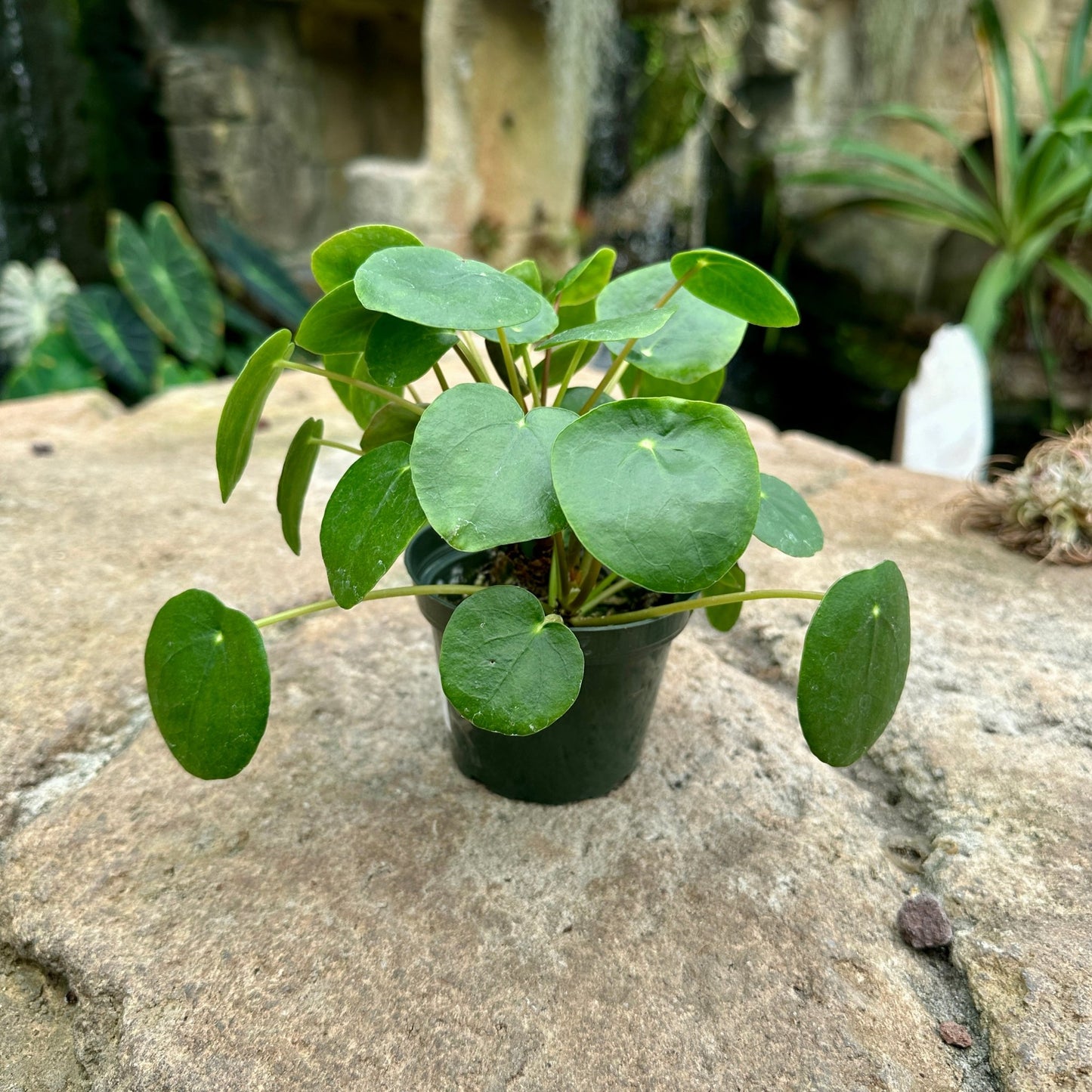
Pilea peperomioides - Chinese Money Plant
Pilea peperomioides - Chinese Money Plant
Couldn't load pickup availability
Share
The Chinese Money Plant (Pilea peperomioides) is an iconic houseplant known for its quirky, pancake-shaped leaves that seem to float on air. This easy-to-grow, fast-growing perennial is a symbol of good luck and prosperity, making it a perfect gift or addition to any plant collection.
Plant Details:
· Botanical Name: Pilea peperomioides
· Common Names: Chinese Money Plant, Missionary Plant, Coin Plant, Friendship Plant, Pancake Plant
· Chinese Names: 镜面草 (Jìng Miàn Cǎo), 翠屏草, 金钱草
· Family: Urticaceae (Nettle family)
· Type: Evergreen, herbaceous perennial
· Native Range: Yunnan Province, Southern China
· Mature Size: 8 to 12 inches tall and wide
· Growth Habit: Compact, erect, clumpin
Care Instructions
Light:
Provide bright, indirect light for the best growth. An east- or north-facing window is ideal. Avoid harsh, direct sunlight which can scorch the leaves. Rotate the plant a quarter turn every 2 to 4 weeks to prevent it from leaning towards the light.
Water:
Water when the top 1 to 2 inches of soil feel dry. Water thoroughly, allowing excess to drain. Keep soil evenly moist but never waterlogged, as this plant is susceptible to root rot. Reduce watering in the winter months.
Soil:
Use a well-draining, aerated potting mix. A blend of peat moss, perlite, and coco coir in a 2:1:1 ratio works well. Standard houseplant potting mix with added perlite for drainage is also suitable.
Temperature & Humidity:
Thrives in temperatures between 65–75°F (18–24°C). Protect from cold drafts and temperatures below 50°F (10°C). Prefers average household humidity but appreciates occasional misting or a pebble tray, especially in dry conditions.
Fertilizer:
Feed with a diluted, balanced liquid fertilizer once a month during the spring and summer growing season. Reduce or stop feeding in the fall and winter.
Pruning & Propagation:
Remove yellow or damaged leaves as needed to maintain appearance. Propagate easily by removing offsets (pups) from the base of the parent plant and potting them in moist soil.