Sarraceniaceae
Sarracenia purpurea - Purple Pitcher Plant
Sarracenia purpurea - Purple Pitcher Plant
Couldn't load pickup availability
Share
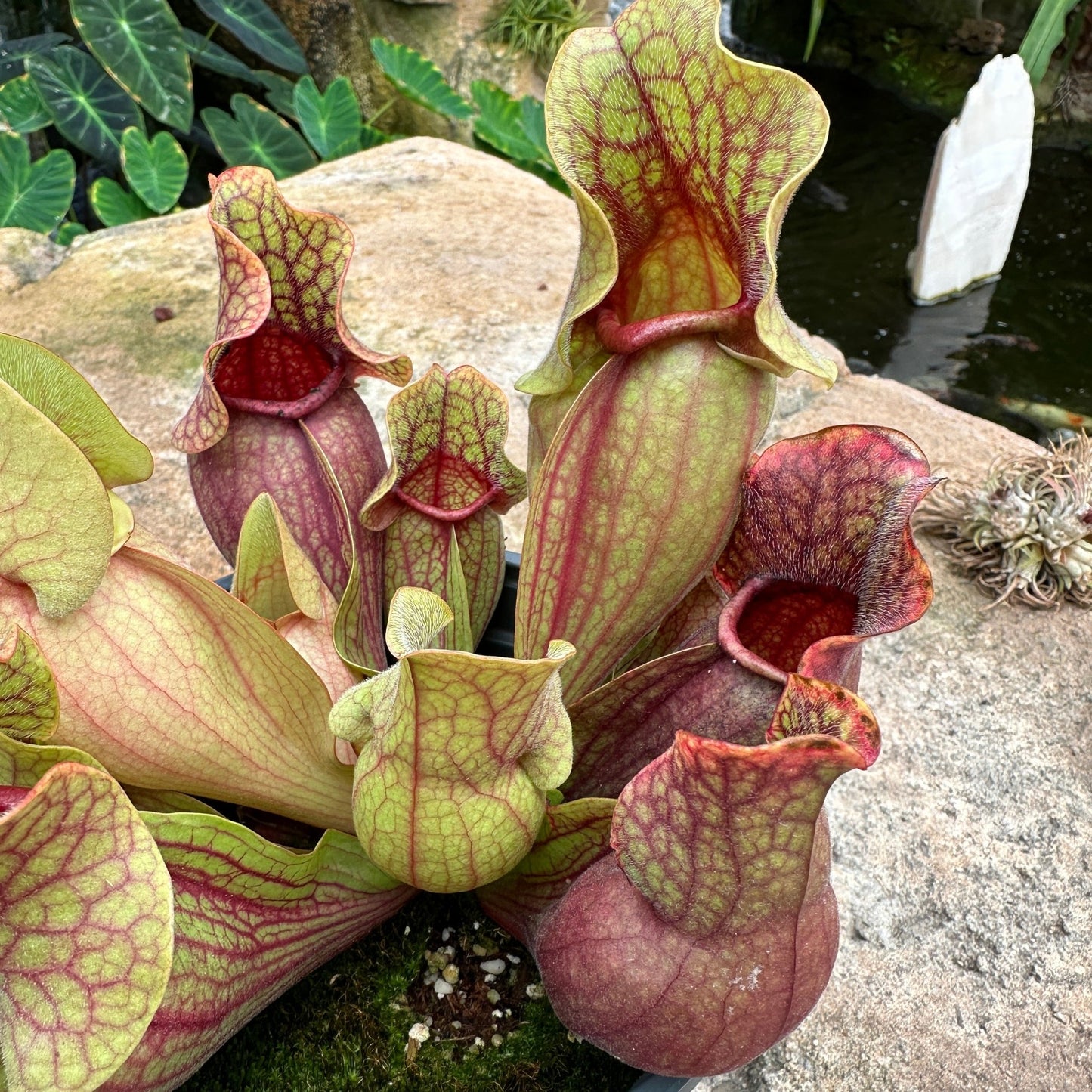
The Purple Pitcher Plant (Sarracenia purpurea) is a captivating, cold-hardy carnivorous plant native to North America. Its squat, green pitchers are flushed with purple veins and topped with an upright, frilled lid. A fascinating and easy-to-grow bog plant that traps insects to supplement its nutrition in nutrient-poor soils.
Plant Details:
· Botanical Name: Sarracenia purpurea
· Common Names: Purple Pitcher Plant, Common Pitcher Plant, Northern Pitcher Plant
· Family: Sarraceniaceae
· Type: Evergreen, insectivorous perennial
· Native Range: Eastern North America (Canada and USA)
· Mature Size: 4-12 inches tall; spreads 4-20 inches
· Hardiness: USDA Zones 3-8
· Growth Habit: Clump-forming, mat-forming
· RHS Award: Award of Garden Merit
Care Instructions
Light:
Provide full sun for at least 6 hours daily. A bright south- or west-facing window is ideal. In part shade, the leaf coloring will not develop properly, and the pitchers may droop.
Water:
Use only purified water such as distilled, reverse osmosis, or rainwater. Keep the soil constantly moist to wet and never allow it to dry out. The best method is to sit the pot in a tray of water, allowing the plant to absorb moisture from the bottom. A dried Sarracenia is a dead one.
Dormancy (Winter Rest):
This plant requires a winter dormancy period of 3-4 months at temperatures between 35-50°F (2-10°C). During this time, growth will slow, and pitchers may die back. Reduce watering slightly but do not allow the soil to dry out completely. Trim dead pitchers in early spring as new growth begins.
Feeding:
Do not fertilize. Your Purple Pitcher Plant obtains all its nutrients from captured insects. If kept indoors, you can supplement its diet by placing a small insect (like a fly or gnat) into an open pitcher every few weeks. Do not feed it meat or human food.